No Air-Con, No Worries: 12 Renter-Friendly Ways to Keep Your Apartment Cool This Summer

Here’s the thing nobody mentions at the inspection in July: the apartment that felt fine in winter can be genuinely unbearable by January. West-facing glass, no eaves, dark roof, no air-con, and a landlord who has no plans to install one.
You can’t re-engineer the building. But most of the difference between “surviving summer” and “sleeping fine” comes down to habits and a handful of cheap, removable things — not a $900 appliance.
These twelve work in a rental. Nothing here needs drilling, nothing leaves a mark, and nothing needs to come up at your next inspection.
First: stop the heat getting in
Once heat is inside a small apartment it has nowhere to go. Everything below is about the hours before you feel hot.
1. Close the blinds before the heat arrives, not after
The instinct is to shut the curtains when the room is already hot. By then you’ve just trapped it. The window that matters shifts through the day: east-facing glass does its damage from sunrise to about 10am, west-facing glass from about 3pm until sunset, and west is always the brutal one in an Australian summer.
So the routine is: close the east side when you get up, open it mid-morning, then close the west side by early afternoon — before the sun gets around to it. Two thirty-second jobs a day, and on a 38°C afternoon it’s the single highest-impact thing on this list.
2. Upgrade to blockout curtains — no drilling required
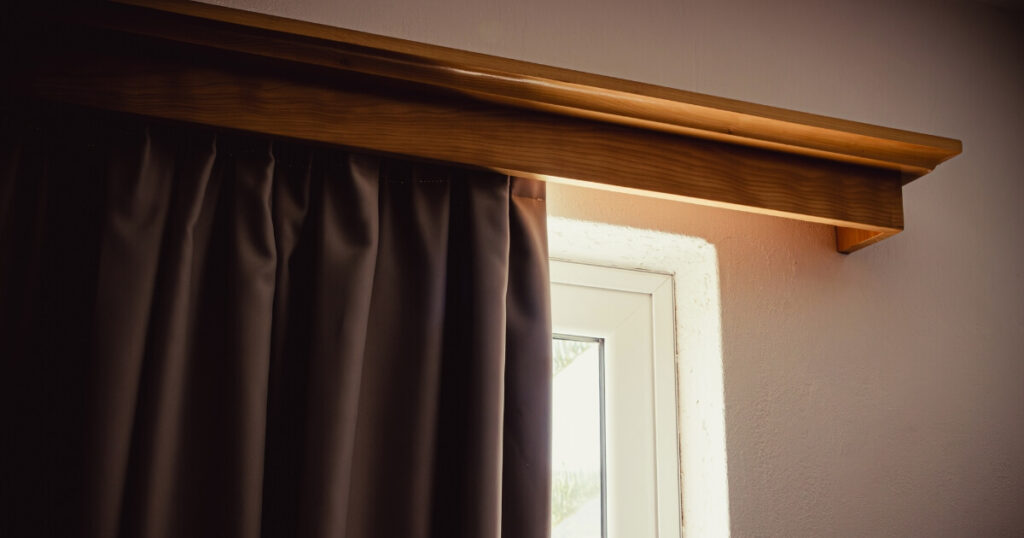
Vertical blinds and thin roller blinds barely slow radiant heat. A proper blockout panel does, and you don’t need to touch the wall to hang one.
- Tension rods wedge inside a window reveal with no screws — fine for a single window up to about 120cm wide.
- Add a blockout liner behind curtains you already have, if the existing rod is staying. Liners clip onto the same hooks and cost less than new curtains.
- Budget: blockout panels run roughly $15–$30 each at Kmart or Target, around $40–$70 at Ikea or Spotlight for heavier thermal-backed ones. One treated west window is better value than four half-treated ones.
If you’re unsure what you can mount without risking your bond, our guide to landlord-approved ways to personalise a rental covers the damage-free hanging options in more detail.
3. Put reflective film on your worst window
Static-cling or peel-off reflective film knocks back a serious chunk of the heat coming through glass, costs around $20–$40 for a roll at Bunnings, and comes off cleanly when you leave — which is exactly what you want in a rental. Unlike permanent adhesive tint, static-cling film is made for temporary use — it holds by surface tension against the glass rather than glue, so it lifts off without residue or marks when you take it down. That’s why it’s the version renters reach for. Apply it to the inside of the glass with a spray bottle of soapy water and a plastic squeegee.
Two cautions worth knowing. Permanent adhesive film is a different product and can be a real problem to remove, so check the packet says removable or static-cling. And if your windows are double-glazed, skip it — trapped heat between the panes can stress the seal. Anything you’re not sure about, send your landlord or agent a short message asking first, and keep the reply.
4. Shade the glass from outside, if you have a balcony
Shade that stops sunlight before it reaches the glass beats anything you do indoors. A couple of tall potted plants, a clamp-on balcony umbrella, or a freestanding outdoor blind on a weighted base will all take the edge off a west-facing wall of glass without a single fixing.
Keep it freestanding or clamped. Anything screwed into the wall, railing or ceiling is a conversation with your landlord first — in writing, before you buy it.
Then: move the air the right way
5. Time your cross-breeze
A cross-breeze needs two openings on different sides of the apartment, and it only helps when the air outside is cooler than the air inside. In most of Australia that means after about 7pm and before about 8am in summer.
The full routine: windows and internal doors wide open overnight to flush the heat out, then shut everything up by mid-morning to hold the cool air you banked. It feels wrong to close a house on a hot day. Do it anyway — it works.
If your apartment only has windows on one side, use the fan trick below instead.
6. The box-fan exhaust trick
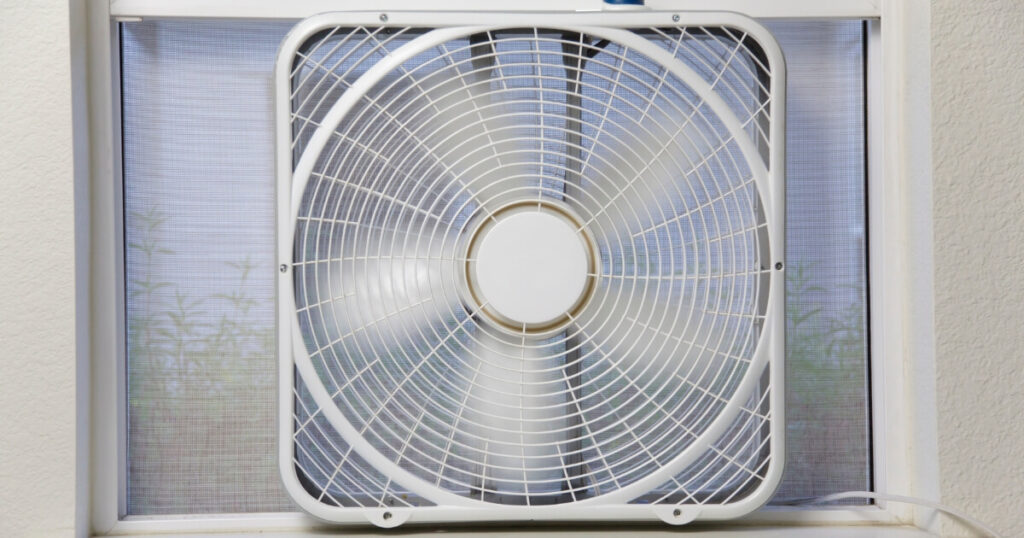
This is the one most renters have never tried, and it’s close to free. Put a box fan in the hottest room’s window facing outwards so it blows air out of the apartment. That pushes the hot air out and pulls cooler air in through every other opening. One fan, pointed the unintuitive way, moves far more heat than the same fan pointed at you.
Best time to run it is the hour after sunset, when the outside air has dropped but your walls are still radiating the day’s heat. A box fan is about $25–$40 at Bunnings or Kmart. If it won’t sit securely in the window frame, don’t force it — a pedestal fan on a chair aimed out an open window does roughly the same job.
7. Buy the right fan, and point it at yourself
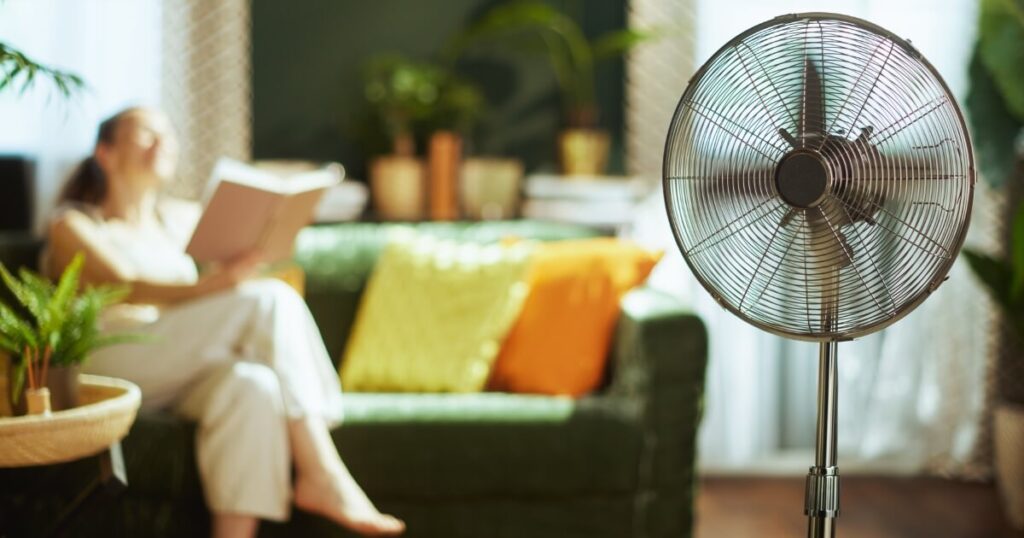
Fans don’t cool rooms. They cool people, by moving air across your skin — which means placement matters more than power.
| Fan type | Typical price | Best for |
|---|---|---|
| Pedestal | $20–$60 | Adjustable height, aim it at the couch or bed |
| Tower | $40–$90 | Narrow spaces, quieter, oscillates wide |
| Box | $25–$40 | The window-exhaust trick above |
| Desk/clip | $15–$30 | Aimed at you while you work or sleep |
Running cost is the happy part. A pedestal fan draws roughly 45–60 watts, so at typical 2026 east-coast electricity prices it costs somewhere around 1–2 cents an hour. A portable air conditioner draws twenty to thirty times that. Two well-placed fans will almost always be the smarter buy — worth factoring in if you’re still kitting the place out, as we covered in the $2,500 first apartment setup guide.
One classic hack with a caveat: a bowl of ice or a damp towel in front of a fan does give you a noticeably cooler breeze, but it works by adding moisture to the air. In dry inland heat — Perth, Adelaide, western Sydney on a northerly — it’s great. In humid coastal summer, it just makes a sticky room stickier.
Stop making heat indoors
8. Don’t cook heat into the apartment
An oven running for forty minutes can lift a small apartment by several degrees, and it’ll still be there at bedtime. On hot days: air fryer, microwave, electric kettle, BBQ, or food that needs no heat at all. If you do use the oven, run it early in the morning and open up afterwards.
Same logic for the dryer — it dumps both heat and moisture into the room. Dry washing outside or on the balcony in summer. A drying rack in the middle of a closed-up living room is the worst of both worlds.
9. Switch off the invisible heaters
Small heat sources add up in a space this size. Old halogen downlights are tiny radiators — if any fittings are still halogen, swapping the globes for LED cuts heat and running cost at once (globes you take with you when you move, so keep the originals in a labelled bag). Gaming consoles, desktop PCs, TV boxes and phone chargers all run warm on standby, so switch them off at the wall in the rooms you sleep in. And keep the fridge’s back and sides clear — a fridge jammed hard against a wall works harder and vents more heat into the kitchen.
Cool the person, not the building
10. Use the twenty minutes before bed
Falling asleep requires your core temperature to drop. Help it along:
- A cool (not cold) shower right before bed. Cold water makes your body clamp down on blood flow to the skin; lukewarm-to-cool works better.
- Wet your pulse points — wrists, back of the neck, inside the elbows, feet. A damp flannel on the back of the neck under a fan is extremely effective.
- Freeze a water bottle and put it near your feet, or wrap it in a tea towel and put it under the pillow for twenty minutes before you get in.
- Feet out of the covers. Your feet are one of the body’s main heat-dumping surfaces. It’s not a myth.
11. Swap to summer bedding
The doona you slept under in July is not survivable in January. Switch to a single cotton or linen flat sheet — linen in particular moves moisture away from you far better than polyester blends, which is most of what cheap sheet sets are made from. Check the label.
While you’re at it, look at what’s between you and the mattress: a thick waterproof mattress protector traps a surprising amount of heat. A thin cotton one is the summer version.
12. When a portable cooler is actually worth it
Sometimes the honest answer is that habits aren’t enough — a top-floor west-facing flat with no cross-ventilation is a hard building to beat. Two options renters can actually use:
- Evaporative cooler ($150–$350). Light, no venting needed, cheap to run. Only genuinely effective in dry heat — in humid coastal summer it underperforms badly.
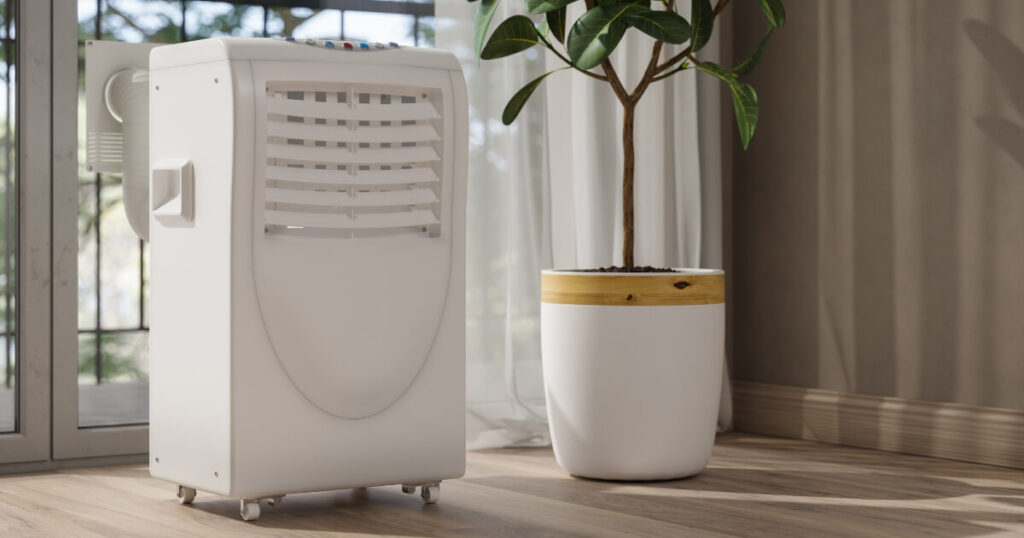
- Portable air conditioner ($400–$900). Works anywhere, including humidity. Needs its exhaust hose vented out a window with the supplied panel kit, draws roughly 1.0–1.5kW — ballpark 30–60 cents an hour to run — and is heavy and loud.
Three things to get right before you buy. Venting is not optional: an unvented portable air conditioner pumps its own waste heat back into the room and makes things worse. And both units generate water — evaporative coolers add moisture to the air, portables collect condensate — so empty the tank, keep the unit off carpet, and give the room a wipe-down if you see condensation on the walls or windows. Letting that sit is how you end up with a mould problem, which is a far more expensive conversation than a hot bedroom. Our weekly cleaning rhythm has the bathroom-and-condensation habits that stop it starting.
The third one is the trap nobody warns you about: the window kit leaves your window unlockable. The plastic panel that the exhaust hose vents through sits in the open window track, which means the window can’t close onto its latch while the unit is running — and a window that can’t lock is an obvious problem on a ground floor or anywhere with balcony access. The fix is cheap: cut a length of timber dowel or a broom handle to fit the empty part of the track so the window can’t be slid open any further, or fit a clamp-on sash lock. Both come off with the cooler at the end of summer.
If the window kit needs anything screwed into the frame, or you’re installing something that stays in the window for months, message your landlord or agent first and keep the written reply. It’s a two-minute message that protects your bond.
The order to do this in
If you only do three things this summer, do these: close the west-facing blinds by early afternoon, flush the apartment with a cross-breeze after sunset, and point a fan at your skin instead of at the room. Those three cost nothing and do most of the work.
Then spend money in this order — blockout curtain for the worst window, a decent pedestal fan, removable reflective film — and only look at a portable cooler if you’ve done all of that and your apartment is still beating you. For most rentals, it won’t come to that.