15 Landlord-Approved Ways to Personalise a Rental (Without Losing Your Bond)
Renting doesn’t mean living somewhere that feels temporary. Some of the best-styled homes on Pinterest are rentals — every wall untouched, every fitting original — because the people living in them figured out where the freedom is inside the constraints.
The constraints are real: you can’t paint, you can’t drill without consent, and anything you change has to be returned to its move-in condition when you leave. But there’s a huge amount you CAN do — and most of it costs less than a coffee run.
This is a list of 15 landlord-approved changes that make a rental feel like yours, without risking your bond. Most are damage-free and can be reversed in an afternoon. A couple technically count as “minor alterations” under NSW tenancy law and need written consent from your landlord — but the law explicitly says the landlord cannot unreasonably refuse them. Both types are flagged below so you know what to ask for.
For the underlying rule — what you’re legally allowed to leave changed vs what has to go back to how you found it — see our guide on fair wear and tear vs damage in a NSW rental.
Before you start — the rules that shape your options
Two quick statutory notes so nothing on this list surprises you at end of tenancy:
- Section 66 of the Residential Tenancies Act 2010 requires the landlord’s written consent for fixtures or alterations to the premises. Small removable items don’t count as fixtures. Anything that involves drilling, painting, attaching something permanent, or swapping an existing fitting does. Section 66(2) says the landlord cannot unreasonably withhold consent for minor alterations — so if you want to do something bigger, ask. If the landlord refuses consent for a genuinely minor alteration, you can apply to the NSW Civil and Administrative Tribunal (NCAT) for an order permitting the change.
- Section 51(3)(b) of the same Act requires you to leave the premises “as nearly as possible in the same condition, fair wear and tear excepted.” Everything on this list is designed to leave nothing behind on move-out.
Take dated photos of every room BEFORE you start changing anything. That’s your evidence that any marks or fixtures were pre-existing, not caused by your decor. Store them somewhere durable (cloud + local).
Walls (without a single drill hole)
The rental landlord’s favourite phrase is “no holes in the walls.” Here’s how you get personality on the walls anyway.
1. Command strips and adhesive hooks
The single most useful tool in a renter’s kit. 3M Command strips hold up to 7kg with the right variant, come off cleanly if you follow the instructions (pull DOWN slowly, not out), and let you hang almost any framed art without a nail. Buy the biggest pack you can afford — you’ll always find another use.
Watch out for: old, chalky paint or freshly painted walls. Command strips are one of the most common causes of end-of-tenancy paint damage — the adhesive is often stronger than the paint bond, especially on cheap “landlord special” walls that weren’t properly prepped. Test one strip in an inconspicuous spot for 24 hours before committing to a big installation. If the test strip pulls paint when removed, don’t proceed.
2. Leaning frames against walls
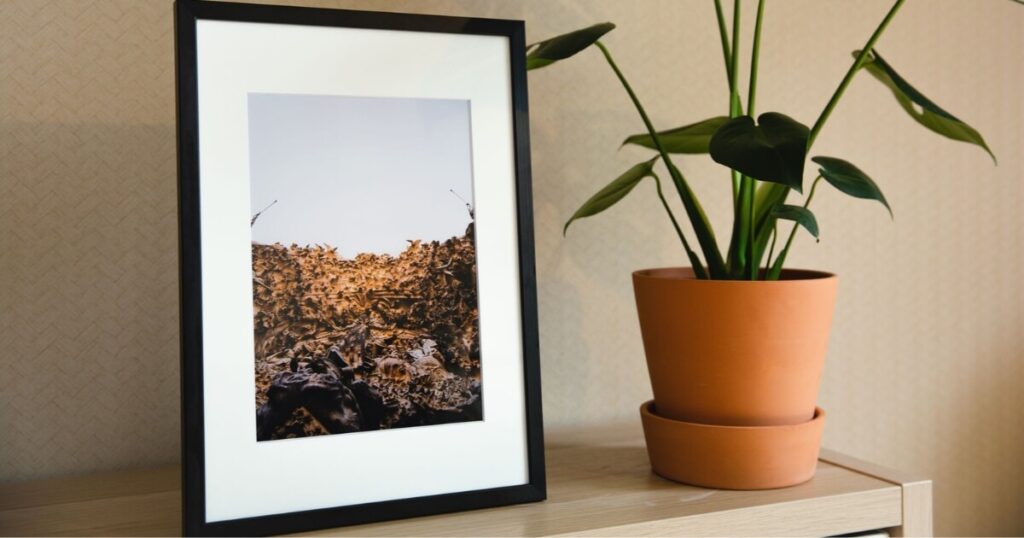
The high-design move that costs zero risk. Buy one oversized framed print (60cm+ wide) and lean it against the wall — on top of a low bookshelf, behind a couch, on the floor of a hallway. Instantly upscale, zero commitment, and it moves with you.
3. Removable peel-and-stick wallpaper
For a feature wall or a bathroom accent. Modern peel-and-stick wallpaper (brands like Chasing Paper, Tempaper, or the many Australian equivalents) applies with no adhesive residue and pulls off cleanly IF removed within a reasonable window. Great for a rental bathroom or the back of an open shelf.
Watch out for: the adhesive cures over time. Leaving peel-and-stick wallpaper up for years makes removal much harder and increases the risk of pulling paint off with it. Never apply to walls painted within the last 6 months (the paint hasn’t fully cured either). Test a small area first. And critically: if you can’t remove it cleanly at end of tenancy, leaving it in place counts as an unauthorised alteration and can cost your bond.
4. Washi tape borders and shapes
For temporary designs — a border around a doorway, a geometric shape behind a bed, colour framing around a mirror. Washi tape peels off cleanly and comes in every colour. Especially good in kids’ rooms.
Textiles that transform a room
The fastest and cheapest way to change how a space feels. All fully reversible.
5. Layered rugs over bad flooring
A rug immediately warms a cold room and hides carpet stains, worn tiles, or unfashionable flooring you’re stuck with. Layering a smaller rug over a large jute base doubles down on texture. Look for second-hand rugs on Facebook Marketplace or op shops — you don’t need new.
6. Statement curtains on existing rails
Most rentals come with basic white blinds or vertical louvres. Add a curtain rod extension OR use the existing rail with new curtains for an instant style upgrade. Floor-to-ceiling curtains hung above the window frame make rooms look taller.
7. Fabric wall hangings (via Command hooks)
Textile wall hangings — a woven macrame piece, a big tapestry, a vintage kimono — add warmth and texture without any wall damage when hung from Command hooks or over-the-door hangers.
8. Fresh bedding and throws
The bedroom’s mood is 80% textiles. New sheets, a duvet cover, a throw blanket at the foot of the bed, and 2-3 cushions completely change the vibe of the room. Zero commitment, moves with you.
Furniture, layout, and lighting
The bones of the room can be rearranged without touching the property at all.
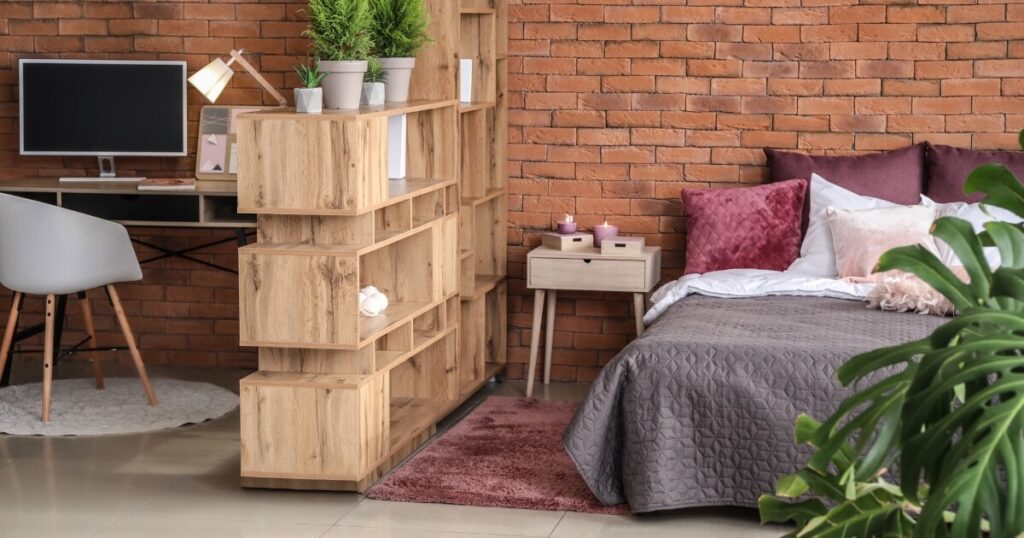
9. Freestanding bookshelves to define spaces
An open bookshelf placed perpendicular to a wall creates two “rooms” from one — useful in a studio or open-plan area. IKEA Kallax units are the classic choice for a reason. Fill with a mix of books, plants, and objects for a curated look.
10. Standalone floor lamps
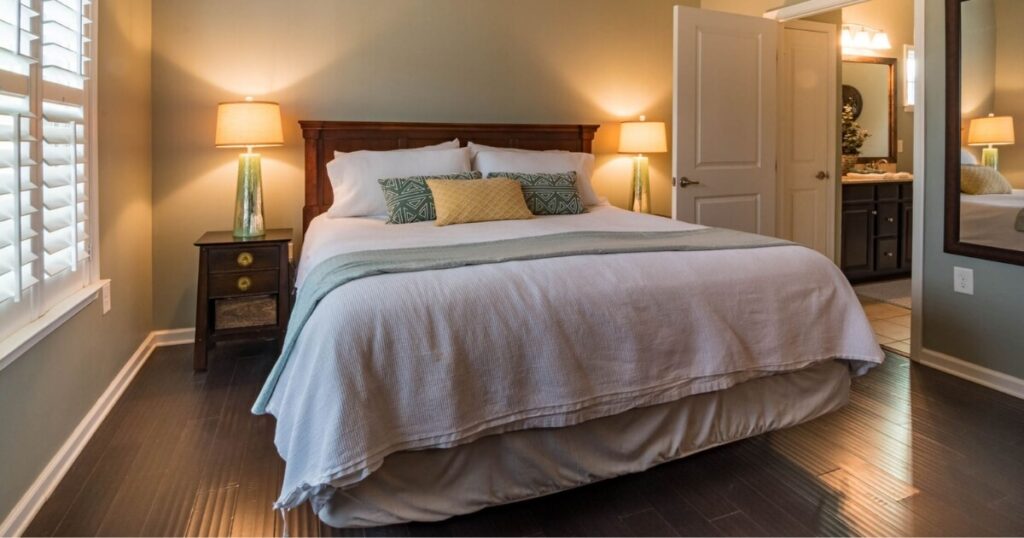
Rental lighting is almost always terrible — one overhead fitting per room, glaring downlight. Add 2-3 warm-toned floor and table lamps and turn the overhead off. The room will feel completely different at night without any change to the actual fittings.
11. Rearrange, don’t accept the default
The couch doesn’t have to face the TV wall. The bed doesn’t have to sit under the window. Move furniture around — angle a couch, float a bed away from the wall, create a reading nook in an unexpected corner. Costs nothing; changes everything about how a room lives.
Kitchen and bathroom refresh
The two hardest rooms to personalise in a rental. Here’s what actually works.
12. Peel-and-stick tile stickers
For dated bathroom or kitchen splashback tiles. Peel-and-stick tile decals (marble-effect, terrazzo, subway tile) apply over existing tiles and remove cleanly. Not a full renovation, but a serious visual upgrade for under $50.
Watch out for: test on one tile first. Some grout profiles resist the adhesive. And always remove them at end of tenancy — leaving decals in place could be treated as an alteration.
13. Swap cabinet hardware (ask consent first — keep the originals!)
Ugly kitchen or bathroom cabinet knobs? Unscrew them, put the originals in a labelled ziploc bag, and install replacements. Modern brass, matte black, or ceramic knobs cost $5-15 each and transform a whole kitchen. On move-out, swap the originals back and take your new ones with you.
Legal note: cabinet hardware is technically a fixture under NSW law, so swapping it is a “minor alteration” under section 66. That means the correct process is to ask your landlord for written consent first. A short email — “I’d like to swap the kitchen cabinet knobs for a more modern style. I’ll store the originals safely and reinstall them at end of tenancy. Can you please provide written consent?” — is enough. Under section 66(2) the landlord cannot unreasonably refuse. Many tenants do this without asking, but getting written consent protects you completely.
Critical: save the original hardware. Losing them is a genuine bond risk — you may be charged the reasonable cost of replacing missing fixtures.
14. Bathroom textiles + storage refresh
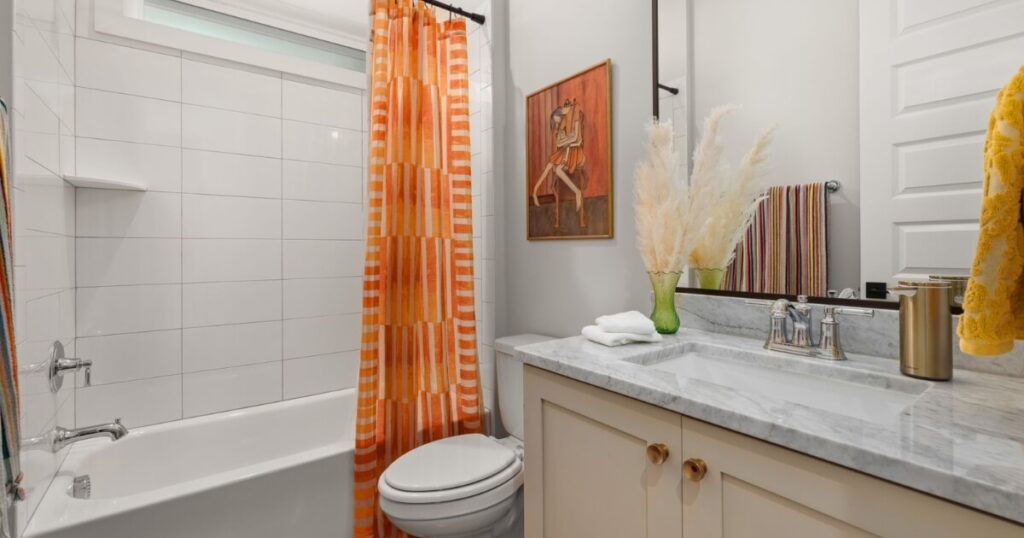
New shower curtain, bath mat, bathroom bin, folded towel stack, small standing shelf for products, and a plant. Under $150 total and the bathroom looks like a different room. All items leave with you.
Plants — the highest-impact category
15. Bring in plants
More life, more colour, more texture, no wall damage. Even one large statement plant (a fiddle-leaf fig, monstera, kentia palm) changes a room’s whole feel. Smaller trailing plants (pothos, philodendron) work on bookshelves and window sills. Choose species suited to your light levels — a north-facing apartment supports different plants than a south-facing one.
Grouped plants read as more intentional than scattered singles. Try a cluster of 3-5 at different heights in one corner.

What to avoid — the traps that DO cost bonds
Some rental “hacks” you’ll see on Pinterest can genuinely cost you at end of tenancy:
- Painting walls, even “just one accent wall” — permanent alteration under s66; needs landlord consent and you’ll be liable to restore
- Installing shelves that need wall anchors — same category as painting; drill holes are damage
- Contact paper on kitchen benchtops — often lifts finish when removed, especially on old laminate
- Removable wallpaper on a very old paint job — can pull the paint off with it
- Losing the original cabinet hardware / light fittings / curtain rods — anything you swap must be swappable back
- Nailing curtain rods to non-original brackets — the brackets are fixtures; needs consent
- Not photographing what was there before — pre-existing marks become “your damage” without evidence
The rule of thumb: if it needs a tool with a battery, it probably needs landlord consent. If it involves adhesive, test a small area first. If it involves swapping a fitting, keep the original safe.
The one thing that makes all of this work
Take before photos on the day you move in. Take after photos on the day you move out. Store both somewhere durable.
Section 30 of the Residential Tenancies Act 2010 makes a signed condition report presumed to be a correct statement of the property’s condition on the day it was signed. That’s your legal shield. Everything on this list is fully reversible — but “fully reversible” only counts if you can prove the property is back to how it was on move-in day.
For more on filling out the condition report properly, see our guide to NSW condition reports. For the standard your cleaning is judged against at end of tenancy, see what “reasonably clean” means when moving out of a NSW rental.
Your rental is your home
There’s a version of renting where everything feels temporary — the walls are someone else’s, the floor is someone else’s, so nothing gets touched. That version is a hard way to live.
The 15 changes above cost between free and modest, take a weekend at most, and can all be reversed in an afternoon. None of them need landlord consent. All of them make a rental feel like yours.
Save this list, pick three to start with, and give yourself permission to actually live somewhere for the year you’re there.