10 Red Flags to Spot on an Apartment Inspection (Before You Sign)
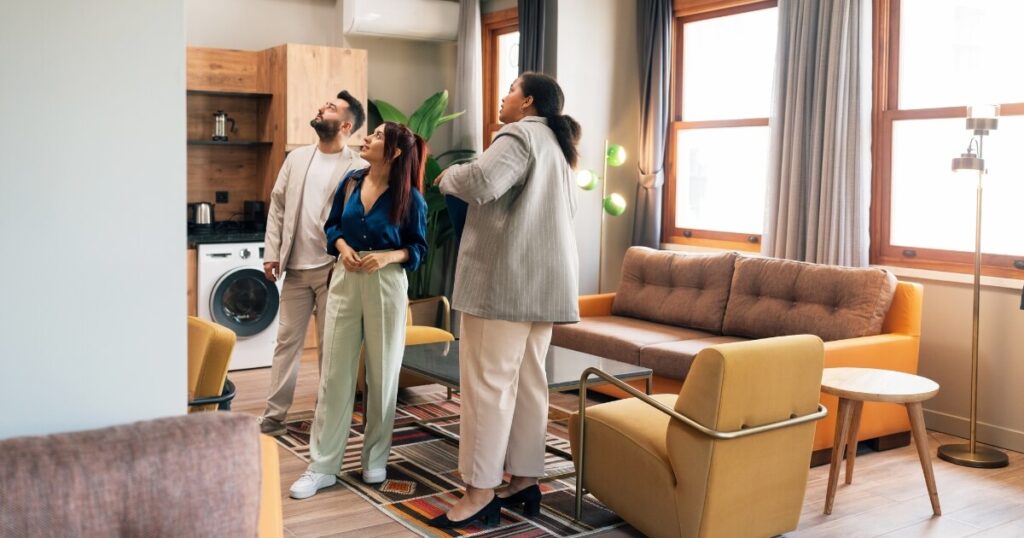
Rental viewings are short — usually 15 to 30 minutes, sometimes fewer if it’s a busy open home. That’s not a lot of time to spot the difference between a well-cared-for property and one you’ll spend the next twelve months chasing repairs on. But the signs are almost always there if you know where to look.
This is a checklist of ten red flags that experienced renters check for at every viewing. Some might make you walk away. Others just need to end up on the condition report so you’re not liable for them when you move out. Either way, walking through with this list in your pocket beats signing based on the first impression.
For the paperwork side of moving in, see our guide to what a NSW condition report is and why it matters — the condition report is where most of what you spot at the viewing will actually protect you later.
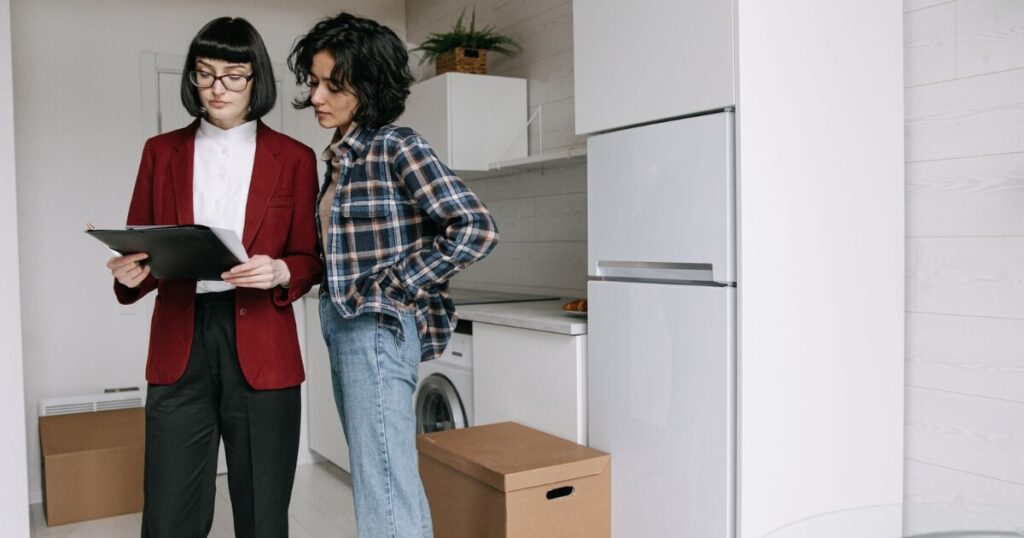
1. Signs of active water damage or mould
The first thing to check, and the most important. Water damage and mould are health issues, expensive to fix properly, and often signal deeper problems (a leaking pipe, poor ventilation, a roof issue).
What to look for:
- Yellow or brown staining on ceilings, especially in corners and under bathrooms above
- Bubbling, peeling, or discoloured paint — especially near windows, in bathrooms, and along external walls
- Black spots in bathroom corners, on shower grout, around window frames
- A musty smell — walk into each room and pause; your nose knows before your eyes do
- Recently repainted patches on ceilings (sometimes used to cover water stains temporarily)
Why it matters: in NSW, mould caused by a structural or ventilation problem is the landlord’s responsibility to fix — but you don’t want to spend the first month of your tenancy chasing repairs. See our detailed guide to who is responsible for mould in a NSW rental.
What to do: ask the agent directly about any staining or patched paint you can see. If the answer is vague (“oh, that’s been there a while”), photograph it and note the specific location. If the tenancy proceeds, get it on the condition report.
2. Missing, expired, or damaged smoke alarms
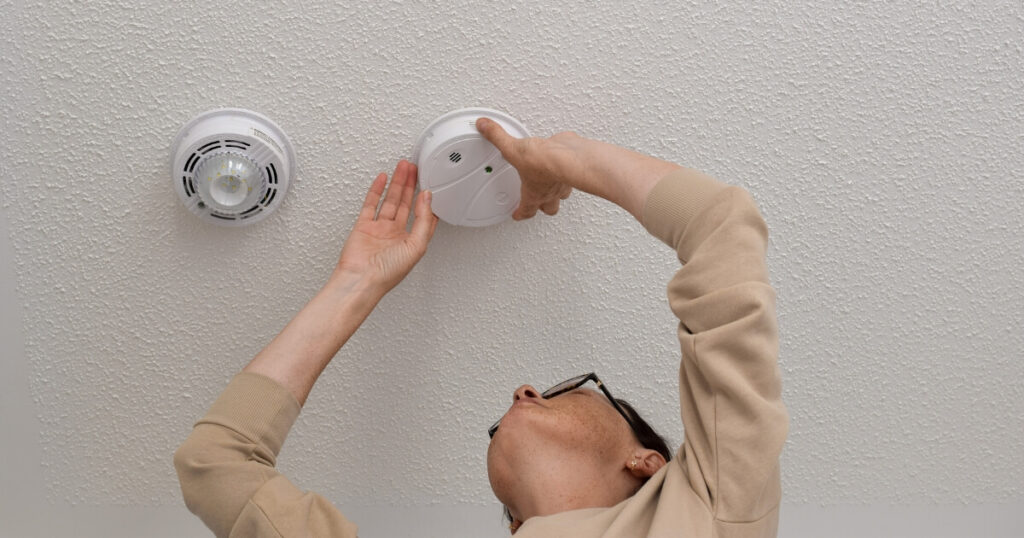
By law, every NSW rental must have working smoke alarms, and it’s the landlord’s obligation to install, replace, and maintain them.
What to look for:
- Smoke alarms visible in the areas the building requires them (usually hallways connecting bedrooms to the rest of the dwelling)
- The date on the alarm (marked on the underside — smoke alarms must be replaced within 10 years of manufacture)
- Alarms that are hanging loose, missing covers, or have visible corrosion
- Any “chirping” alarms during the viewing (indicates a flat battery)
Why it matters: missing smoke alarms are both a fresh sign of poor maintenance AND a life-safety issue. See our guide on smoke alarm maintenance in NSW rentals for the specific landlord obligations.
What to do: if smoke alarms are obviously missing or expired, ask when they’ll be replaced. If the answer is “you can replace them” — that’s not how the law works. Walk away or press the point in writing before signing.
3. Poor ventilation
Ventilation is the underlying cause of most mould problems, and it’s harder to fix than a spot of paint. Check it at the viewing — it’s much easier to walk away now than to argue about it later.
What to look for:
- Exhaust fans in every bathroom and above every stove — turn them on if you can
- Windows in every wet area (bathroom, laundry) that actually open
- Cross-flow ventilation — can you open windows on opposite sides of the apartment?
- Signs of past ventilation problems (staining above vents, condensation marks on windows)
Why it matters: poor ventilation turns a minor moisture issue into ongoing mould in six months. It also affects heating and cooling costs.
What to do: if bathrooms have no exhaust fan and no operable window, that’s a serious problem for a NSW climate. If the exhaust is present but weak, ask when it was last serviced.
4. Broken or missing window locks and door security
Basic security features are usually a landlord obligation, and their absence is both a safety issue and a sign of a landlord who cuts corners.
What to look for:
- Every operable window has a working lock (test them)
- All external doors have functioning locks — turn keys where possible
- Deadlocks on the front door (not always required, but preferred)
- Damaged or missing flyscreens on windows (a summer must-have in Australia)
- Security screens on ground-floor or accessible windows
Why it matters: you need to be able to secure the property. If locks are broken at inspection and the landlord hasn’t addressed them by move-in, you may have grounds to change them yourself — but that becomes a whole additional dispute you don’t need.
What to do: test every lock. Note anything broken and ask when it will be fixed. Get any repair commitments in writing before signing.
5. Signs of pests
Pests are one of the most common tenant grievances and one of the hardest to resolve after move-in, because attribution is contested (was it a pre-existing infestation, or something you brought in?).
What to look for:
- Cockroach droppings around and behind the fridge, in kitchen cupboards, under the sink
- Rodent evidence — small droppings along skirting boards, gnaw marks on food packaging left by the previous tenant
- Silverfish in bathrooms and around any stored paper
- Dead insects on windowsills or in corners (a small amount is normal; a lot suggests infestation)
- Ant trails, especially near the kitchen
Why it matters: if there’s an active infestation at the viewing, it’s the current tenant’s or landlord’s problem. If you move in without documenting it, it can quickly become yours.
What to do: if you see clear evidence, ask what pest control has been done recently. If you decide to sign anyway, photograph everything and make it prominent on the condition report.
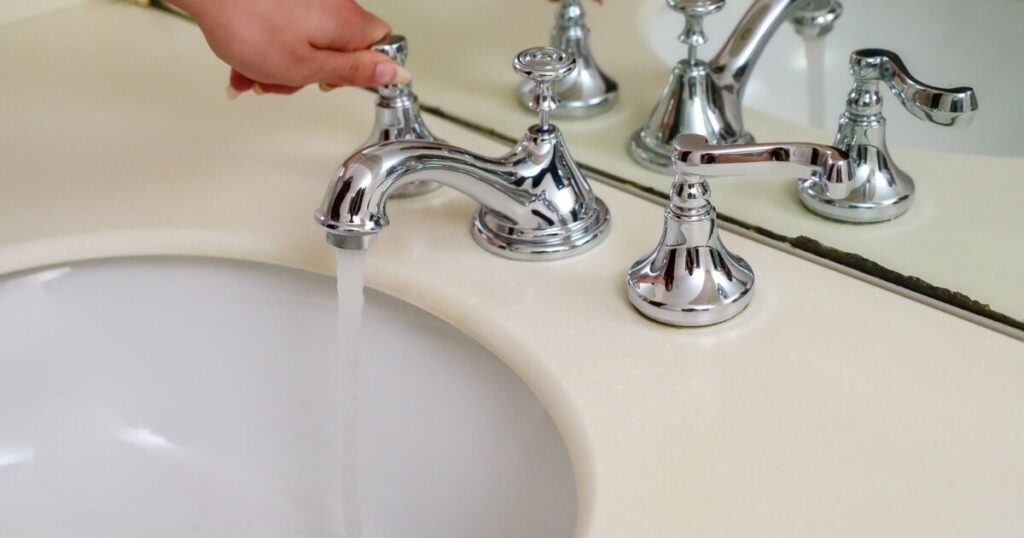
6. Water pressure and plumbing issues
You’ll live with the plumbing every day. It’s cheap to check and expensive to argue about later.
What to look for:
- Turn on every tap (kitchen, bathroom basin, shower, laundry) — hot AND cold
- Check the water pressure isn’t a trickle
- Confirm hot water actually gets hot (not lukewarm)
- Listen for water hammer (a banging noise when you turn taps off)
- Look under sinks for stains, mineral deposits, or ongoing dampness (signs of past or present leaks)
- Flush the toilet and check the refill behaviour
- Watch the shower drain for slow draining
Why it matters: cold showers, no water pressure, and slow drains are quality-of-life issues you’ll face daily.
What to do: if hot water is weak or absent, ask about the hot water system’s age. Slow drains are usually fixable but ask when the property was last inspected for plumbing.
7. Electrical concerns
You don’t need to be an electrician to spot warning signs.
What to look for:
- Enough power points — count them, especially in bedrooms and the kitchen (four to six per bedroom is reasonable; kitchens usually need more)
- Any burn marks or discolouration around outlets
- Damaged switchplates or exposed wiring
- Light fittings that hang loose from the ceiling
- A safety switch (RCD) in the switchboard — ask if you can see the electrical panel
Why it matters: old wiring is expensive to fix, and inadequate power points mean living with extension leads (which is both inconvenient and a fire risk).
What to do: ask about the age of the wiring and when the switchboard was last checked. Photograph anything visibly damaged.
8. Structural signs — cracks and movement
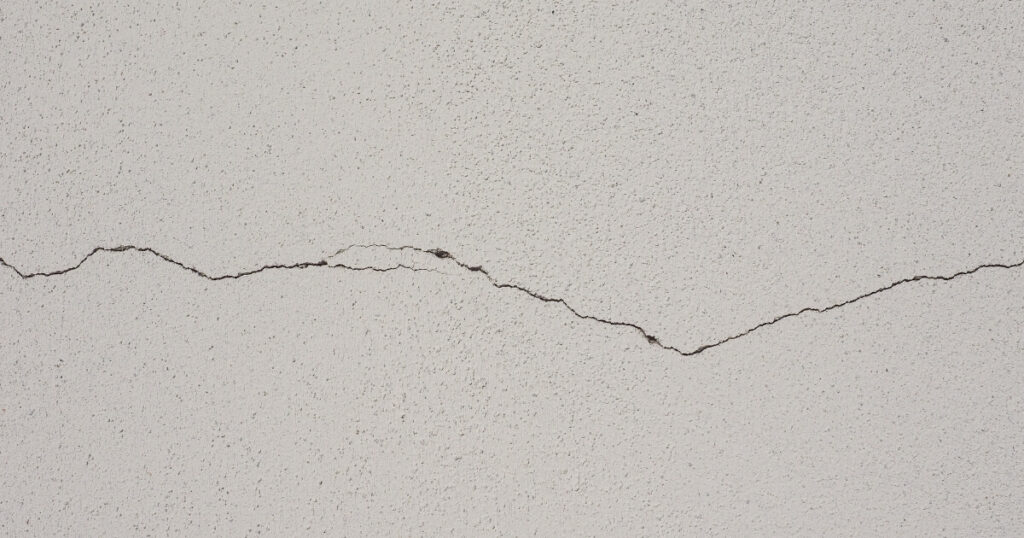
Small hairline cracks in interior paint are normal (see our guide on fair wear and tear vs damage in a NSW rental). What you’re watching for is anything that suggests ongoing structural movement.
What to look for:
- Cracks wider than a hairline, especially at wall/ceiling joints or above doors and windows
- Cracks that stair-step through masonry or continue across multiple surfaces
- Sloping or sagging floors (roll a ball or a marble across a floor if you’re worried)
- Doors that don’t close properly or scrape on the frame
- Windows that stick or don’t fully close
Why it matters: structural issues are the landlord’s to fix but rarely quickly. If they’re bad enough to affect livability, walk away.
What to do: distinguish between cosmetic aging (fine — will be on the condition report) and active structural movement (walk away). If in doubt, photograph and ask.
9. Heating, cooling, and comfort
Australian summers and winters are both intense enough to make an uncomfortable rental miserable.
What to look for:
- Existing heating (reverse-cycle air conditioning, gas heater, ceiling fans)
- Insulation cues — an obviously uninsulated western wall gets brutal in summer
- Which direction bedrooms face (north-facing = warmer in winter; west-facing = hot afternoons)
- Double-glazing on windows in colder climates (rare in Australian rentals but worth noting)
- Ceiling fans in bedrooms (major comfort win at low cost)
Why it matters: you’ll pay for whatever heating and cooling you have to run to stay comfortable. A well-oriented, ventilated apartment costs a fraction to keep liveable.
What to do: ask about the heating and cooling that’s included. If air conditioning is present, ask when it was last serviced. If the property has none, ask whether the landlord would consent to installing a portable AC or a reverse-cycle unit (as a tenant alteration).
10. The overall condition tells a story
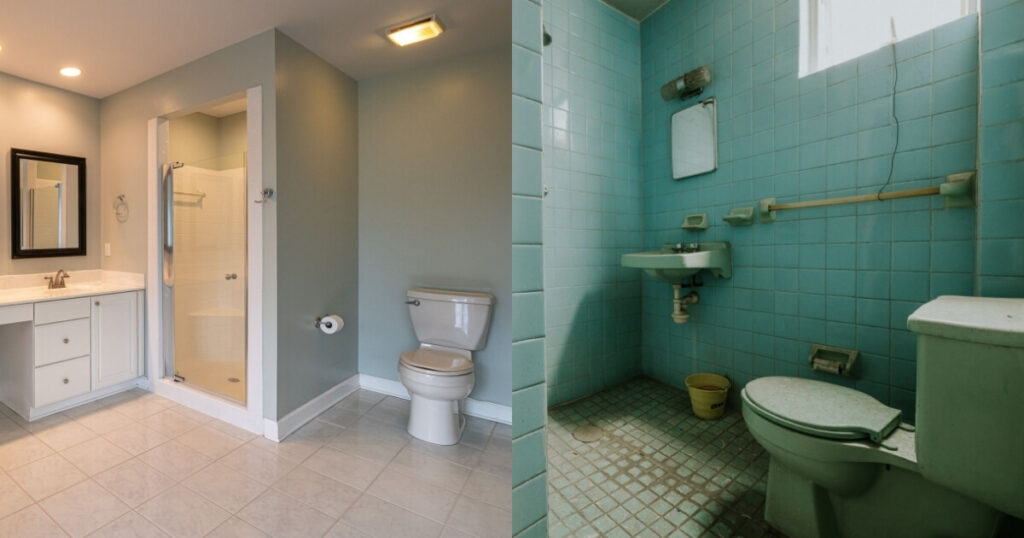
Individual issues are one thing. But if the property has fifteen small problems across the board — chipped skirting boards, patchy paint, worn carpet, sticking doors, minor pest evidence, half-broken blinds — the picture is a landlord who doesn’t invest in maintenance.
What to look for:
- General upkeep in common areas (mailboxes, hallways, front garden, bin area if strata)
- The cleanliness left by the previous tenant (a truly filthy property usually means the landlord didn’t do a bond-cleaning check)
- How the agent talks about the property — enthusiastic and informed, or dismissive and evasive
- Whether promised repairs from the last tenant are visibly complete or still outstanding
Why it matters: the property’s overall condition predicts what your twelve months will look like more accurately than any single feature.
Bonus checks — the non-physical stuff
The ten red flags above are physical, on-property checks. A few other things are worth a moment during the viewing:
- Mobile phone reception — walk into each room with your phone and check bars. Poor reception is a daily frustration, especially in ground-floor units or older masonry buildings.
- NBN connection type — ask the agent (or check the NBN Co website with the address). Fibre-to-the-Premises is fastest; Fibre-to-the-Node or Fixed Wireless may not support work-from-home reliably.
- Noise — pause, close your eyes, and listen. Traffic noise, neighbour noise from adjoining apartments, aircraft overhead, industrial hum. If possible, drive past the property in the evening before signing to hear the actual noise floor.
- Natural light — north-facing windows get sun most of the day in Sydney and the eastern seaboard; south-facing rooms can feel gloomy year-round. Note which rooms feel bright and which feel dim.
- Common areas (if strata) — check hallways, lifts, bin rooms, mailboxes, and any noticeboards. Poorly-maintained common areas or notices about building disputes are strong signals about ongoing strata issues you’ll live with.
A note on “minimum standards”
Under NSW law, a rental property must be “fit for habitation” — this includes being structurally sound, having adequate natural light and ventilation, adequate plumbing and drainage, safe electrical supply, hot and cold water, and private bathroom facilities. Several of the red flags above (water damage, ventilation, plumbing, electrical, structural cracks) are not just annoying issues — a serious enough problem may actually breach the landlord’s minimum-standards obligation.
That matters if you need to escalate later. If a landlord refuses to fix something serious after you move in, “the property doesn’t meet the minimum standards under s52 of the Residential Tenancies Act 2010” is a stronger complaint than “there’s a problem.” NSW Fair Trading and NCAT recognise the specific terminology.
If you decide to sign anyway
Sometimes the market forces the choice. If you’re signing on a property with red flags, protect yourself:
- Get repair commitments in writing before signing — an email from the agent listing what will be fixed and by when.
- Document everything at handover with dated photos and detailed notes.
- Take the condition report seriously. Every issue you spotted at the viewing should appear on it. This is your evidence at end of tenancy — see our guide to NSW condition reports for how to fill it in properly.
- Report new issues in writing during the tenancy — text messages and emails are your paper trail if you need to escalate later.
A quick 30-minute inspection with this checklist is one of the best investments you can make in your next twelve months. If a property doesn’t hold up to it, there’s almost always another one that will — even in a tight market.