Can I change the locks on my NSW rental?
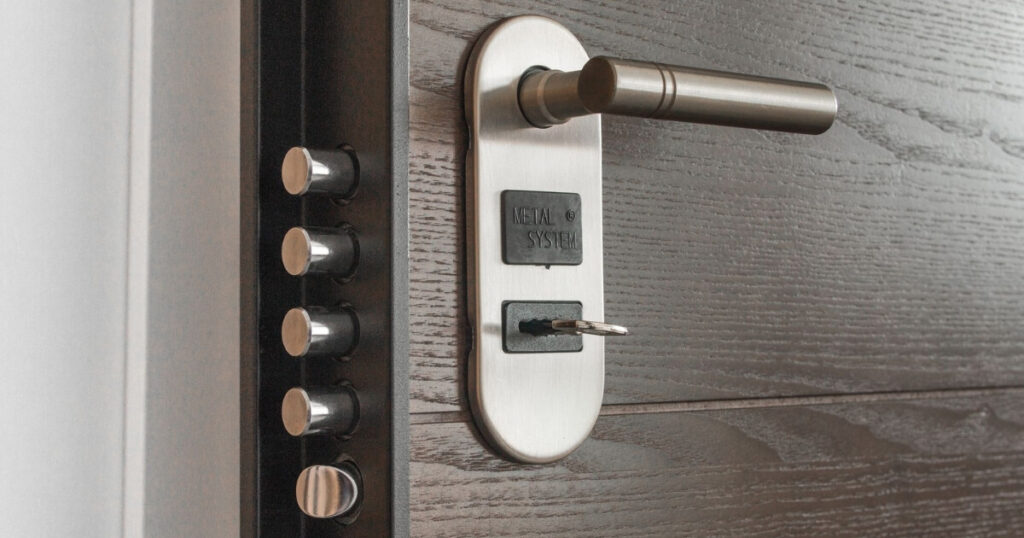
Yes — you can change the locks with your landlord’s agreement, or without it in specific circumstances including an apprehended violence order situation.
Under section 71 of the Residential Tenancies Act 2010, either you or your landlord can alter, remove or add a lock only if the other party agrees, or you have a reasonable excuse. If neither applies, you risk a fine and your landlord may claim the cost of replacing the lock from your bond.
The default rule: both parties must agree (s71)
Section 71 applies equally to landlords and tenants. Neither side can change the locks without the other’s agreement — unless a reasonable excuse exists.
If you change the locks without consent and no reasonable excuse applies, you are guilty of an offence under section 71(4). The maximum penalty is 20 penalty units.
Your landlord cannot unreasonably refuse. If they do, you can apply to the NSW Civil and Administrative Tribunal (NCAT) for an order under section 73 authorising the lock change.
What counts as a “reasonable excuse”?
Section 71(2) lists specific situations that qualify as a reasonable excuse. You do not need the landlord’s agreement if any of these apply.
The four recognised examples are:
- An emergency — for example, if a lock is broken and the premises are unsecure. A broken lock that leaves your home unsafe is also an urgent repair under section 62(k), which your landlord is required to fix promptly.
- A Tribunal order — NCAT has already authorised the change under section 73.
- A co-tenant’s tenancy has ended — a previous co-tenant whose tenancy has been formally terminated still has a key. Important nuance: this covers a co-tenant whose tenancy legally ended (for example, they were removed from the lease or their tenancy was terminated by NCAT). It does NOT cover a co-tenant who has simply moved their belongings out but is still named on the lease — changing the locks to exclude a still-named co-tenant can amount to an illegal eviction.
- An apprehended violence order (AVO) prohibits a tenant or occupant from accessing the premises — covered in detail in the next section.
Section 71(3) adds an important default: if you change the locks without consent, it is presumed you lacked a reasonable excuse — unless you can show evidence to the contrary. In practice, that means you should document your reason before you act, not after.
If you are affected by domestic or family violence
If an apprehended violence order (AVO) is in force against someone who lives with you — or used to live with you — this directly affects your lock rights.
Changing the locks: Section 71(2)(d) makes it a reasonable excuse to alter locks when a tenant or occupant is prohibited from accessing the premises by an AVO. You do not need the landlord’s agreement to change the locks in this situation.
The new key: Section 72(2) is clear — you do not have to give a copy of the new key to a person who is prohibited from accessing the premises by an AVO. That protection applies even if the excluded person was a co-tenant named on the lease.
Your liability: Section 54A protects you from being held responsible for damage caused by a co-tenant during the commission of a domestic violence offence — as long as you are the victim of that offence, or a co-tenant who is not the offender.
Your broader rights: The Act also gives you the right to end your tenancy early without penalty when you are experiencing domestic violence. That pathway runs through sections 105A–105C and involves a supporting document — such as a DVO, a certificate of conviction, a relevant family law injunction, or a declaration by a competent person. A competent person is defined in section 105A and includes registered health practitioners, social workers, and employees of specialist domestic violence services.
These are rights, not options to weigh up. If you are in an unsafe situation, the law is specifically designed to protect you.
Coming change: The Residential Tenancies Amendment (Domestic Violence Reform) Act 2025 (assented 28 October 2025) will replace section 71 to broaden the grounds for changing locks without landlord agreement — to include DVOs (including interstate and foreign orders), family violence injunctions under the Family Law Act, bail or parole conditions, and situations where the tenant reasonably believes a lock change is necessary to prevent a domestic violence offence against the tenant, a dependent child, or another occupant. These changes commence on a date to be proclaimed and are not yet in force. Until then, the four grounds above still apply.
The 7-day key rule (s72)
Whenever you change the locks — with consent, with a reasonable excuse, or after a Tribunal order — section 72(1) requires you to give your landlord a copy of the new key within 7 days.
There are only two exceptions under section 72(1): the landlord agrees that no copy is needed, or NCAT authorises you not to provide one. The AVO carve-out in section 72(2) is separate — it applies to the excluded person, not to the landlord generally.
When handing over the key, protect yourself with a paper trail. Give it in person and ask for a written acknowledgement, or send it by registered post and keep the receipt. A dated text message or email confirming delivery also works.
What happens if you change locks without consent
If you change the locks without consent and cannot show a reasonable excuse, two things can happen.
First, you may be guilty of an offence under section 71(4) — maximum penalty 20 penalty units.
Second, your landlord can claim the reasonable cost of replacing the locks from your rental bond under section 166(1)(d). This is separate from any Tribunal penalty. If you are worried about how bond deductions work, the What can a landlord deduct from my bond in NSW? article explains what landlords can and cannot claim.
If you live in a strata building (apartment or unit)
If you live in a strata scheme, your front door may be treated as common property. Strata by-laws can have their own rules about the types of locks permitted — especially on fire-rated doors — and may require you to get permission from the owners corporation (strata committee) before making any change.
This is a separate requirement from getting your landlord’s consent. Both can apply at once. Before changing a lock in a strata property:
- Check the strata by-laws for your building
- Ask your landlord or agent whether an owners corporation approval process needs to run alongside
Changing a fire-rated lock without approval can create both strata and safety issues, and can void building fire certification. Take extra care in that scenario.
If the landlord refuses to agree
Your landlord does not have an automatic veto. If they refuse consent unreasonably, you can ask NCAT to authorise the change under section 73.
The Tribunal can make an order authorising you to change the locks, and can also deal with the key-handover arrangements.
Document your request in writing first — a text message or email asking for consent is enough. If the landlord refuses or does not respond within a reasonable time, that paper trail supports your NCAT application.
Not sure if your situation lets you change the locks?
Ask RentWiz — our free AI tool answers your specific NSW tenancy question using the actual Act and Regulation. Try it now →
Section 70 gives your landlord a separate but related obligation: they must provide and maintain locks necessary to ensure the premises are reasonably secure. If a lock is faulty, broken, or inadequate for security, that is on them to fix — and section 62(k) classifies a fault that leaves the premises unsafe or insecure as an urgent repair.